
Christian Financial Advisor in Newport Beach: Guiding Your Stewardship

Finding a Christian financial advisor in Newport Beach often starts with a specific frustration: most financial guidance treats faith as an afterthought rather than something that should actively shape decisions about money. For Christians navigating the area's concentrated wealth, business ownership, and coastal real estate, that gap can feel especially pronounced.
Cooke Wealth Management is an independent, fiduciary wealth management firm based in nearby Irvine, incorporating biblical principles into its financial planning process for families throughout Newport Beach, Orange County, and Southern California.
Why Stewardship Is the Right Frame
Stewardship treats wealth as something to be managed responsibly on behalf of a purpose larger than personal accumulation. That framing shapes decisions differently than a purely returns-focused approach, especially in a market like Newport Beach where the financial stakes tend to be higher.
What Christian Financial Guidance Actually Looks Like
Beyond Faith Language Alone
Genuine Christian financial guidance goes beyond faith-related marketing language — it shows up in how specific recommendations get made. A retirement withdrawal strategy, a giving plan, or a wealth transfer decision should each reflect stewardship principles, not just an advisor's general description of their values.
Two Distinct Ways Faith Can Show Up
There are generally two separate ways this plays out: incorporating biblical principles into overall financial planning, and applying specific investment screens to a portfolio, often called Biblically Responsible Investing. These aren't the same service, and it's worth understanding which one — or both — a given advisor actually offers.
A Christian Financial Planning Framework
Connecting Individual Decisions to a Larger Purpose
Christian financial planning should connect individual money decisions to a broader stewardship purpose rather than treating investing, retirement, giving, and estate planning as separate tasks. Each decision affects the others, so a connected framework tends to hold up better than a piecemeal approach.
Giving, Spending, and Saving
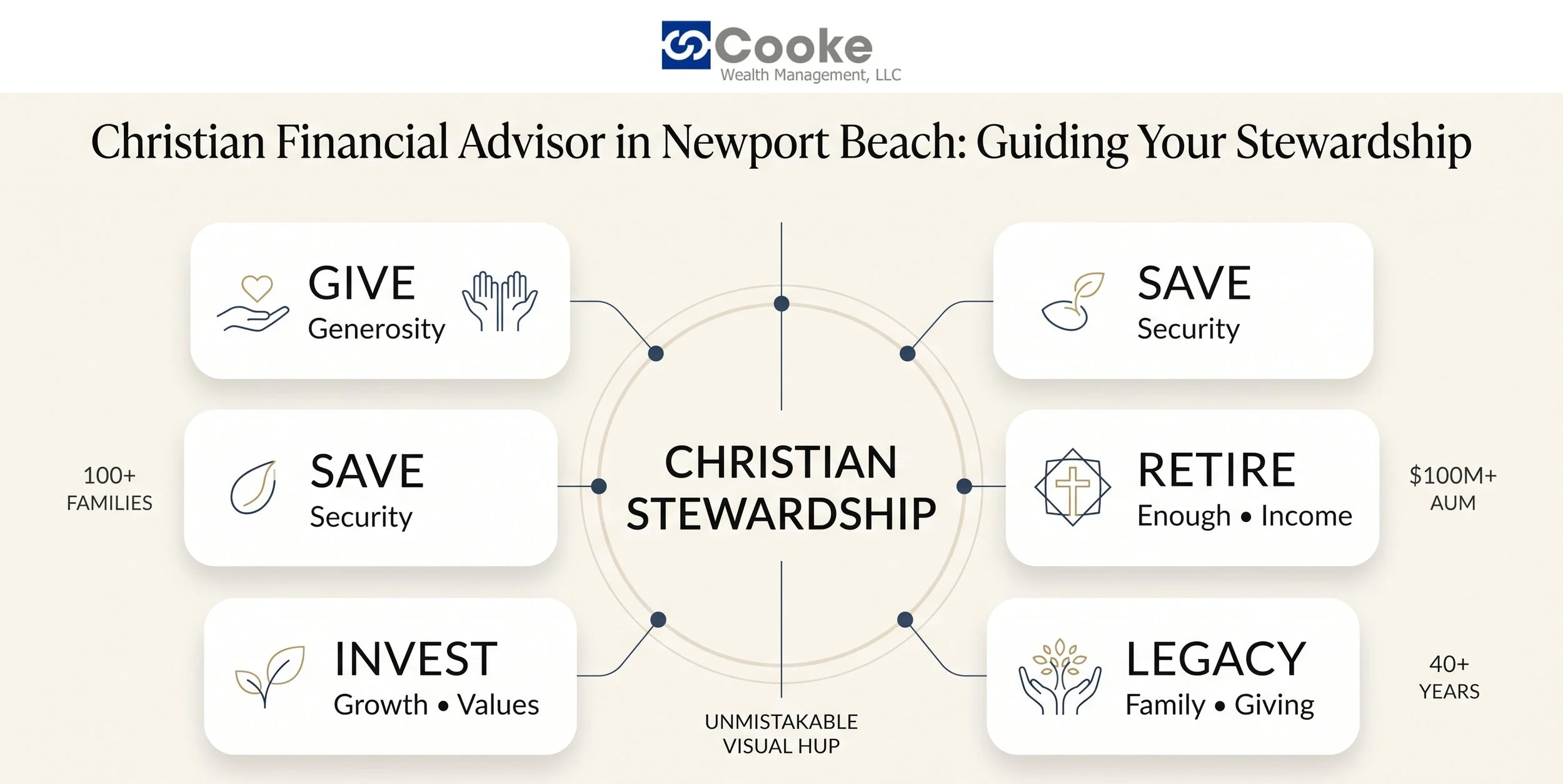
The framework starts with giving: how much to give, when to give, and which assets or strategies best support charitable goals. The IRS provides specific rules for charitable contributions, including gifts of money and property to qualified organizations. Spending asks what lifestyle is sustainable without undermining longer-term responsibilities, while saving considers how much liquidity is needed for emergencies and future goals — the CFPB defines financial well-being partly in terms of control over day-to-day finances and the capacity to absorb shocks.
Investing, Retirement, and Legacy
Investing then becomes a tool for pursuing those goals rather than an end in itself. The SEC's Investor.gov guidance emphasizes that asset allocation sho. For retirement, the central question shifts from "how much can I accumulate?" to "what level of resources is enough to support my needs while leaving room for generosity?" Estate planning then addresses how wealth should be transferred and what purposes it should ultimately serve — each decision connecting to the next.
Stewardship and Newport Beach's Financial Complexity
Concentrated Wealth Raises the Stakes
Newport Beach households often carry concentrated equity, business ownership, or substantial real estate holdings, each raising its own stewardship questions. A large stock position tied to an employer, for instance, raises questions not just about diversification but about how that wealth should ultimately be used and passed on.
Real Estate and Generosity Together
Decisions about selling a coastal property often intersect with charitable giving strategy, particularly for clients who want to use appreciated assets for generosity rather than simply reinvesting the proceeds. Coordinating these decisions requires a planner who understands both the tax mechanics and the values driving the decision.
Biblically Responsible Investing vs. Biblical Financial Planning
Two Related but Different Services
Choosing Biblically Responsible Investing funds addresses only the investment portion of a financial life — typically screening out companies involved in industries like gambling, tobacco, alcohol, or pornography. Biblical financial planning is broader, considering how faith should inform giving, debt, retirement income, and wealth transfer as a whole. Screening criteria also vary significantly between funds, so two strategies marketed as faith-based can hold meaningfully different companies.
The Better Question to Ask an Advisor
Rather than asking simply "are you a Christian advisor," a more useful question is whether an advisor applies biblical principles to planning, investment selection, or both. Some Newport Beach clients want a values-driven planning process without restricting their investment universe, while others specifically want BRI screens applied to their holdings.
Fiduciary Duty: Why It Matters Alongside Faith
A Legal Standard, Not Faith Language
A biblical worldview and a fiduciary duty are separate things. Fiduciary duty is a legal standard: under the Investment Advisers Act of 1940, Registered Investment Advisers generally must act in a client's best interest, regardless of how they describe their values. An advisor can use faith-based language while still operating under a commission-based model with narrower legal obligations.
Confirming an Advisor's Standing
Reviewing an advisor's Form ADV through the SEC's Investment Adviser Public Disclosure database is a straightforward way to confirm registration, fees, and any disclosed conflicts before committing to a relationship.
What Stewardship-Focused Planning Includes
Retirement, Giving, and Wealth Transfer Together
A stewardship-focused plan typically covers retirement income planning, charitable giving strategy, and wealth transfer guidance, evaluated together rather than in isolation. Cooke Wealth Management's retirement planning work is built around helping clients determine how much is genuinely enough — a question with particular weight for clients who want to prioritize generosity alongside their own security.
Investment Management Aligned With Goals and Values
Investment management fits into that same framework. Cooke Wealth Management builds custom portfolios intended for growth, stability, and income, aligned with each client's specific goals — an approach that can incorporate values-based considerations for clients who want that layered into their strategy.
Managing Risk as an Act of Stewardship
Understanding Risk, Not Avoiding It
Good stewardship isn't about avoiding risk entirely — it's about understanding which risks could actually disrupt your goals and managing them deliberately. The SEC notes that every investment involves some degree of risk, and a stewardship-minded plan should address that reality directly.
Concentration Risk Deserves Attention
Concentration risk — too much wealth tied to a single stock, property, or employer — is a common issue for Newport Beach clients with significant equity compensation or real estate holdings. FINRA warns that concentration can amplify losses, which makes diversification a practical stewardship consideration, not just a technical one.
Choosing a Christian Financial Advisor in Newport Beach
Questions Worth Asking Directly
A few direct questions reveal how an advisor actually works: How do biblical principles show up in your specific recommendations, rather than just your marketing? Are you a fiduciary 100% of the time? Do you apply faith-based screens to investments, comprehensive planning, or both?
Why Local Familiarity Still Matters
An advisor familiar with Newport Beach and the broader Orange County market brings context that matters — local real estate dynamics, California-specific tax considerations, and an understanding of the area's particular wealth profile. That local grounding, paired with genuine stewardship-focused planning, often distinguishes an advisor worth trusting from one who simply uses the right language.
Why Cooke Wealth Management Fits This Approach
Experience Built Around Values-Informed Planning
Cooke Wealth Management has served more than 100 families and manages over $100 million in assets, with advisors bringing more than 40 years of combined industry experience. The firm describes its approach as combining biblical principles with academic research and hands-on experience.
A Fiduciary Structure Behind the Values
As an independent Registered Investment Adviser, Cooke Wealth Management operates as a fiduciary rather than under a narrower sales-based standard. That combination — genuine stewardship principles paired with a legal obligation to act in the client's best interest — is often exactly what Christian investors in Newport Beach are looking for but struggle to find in one place.
Build a Financial Plan Grounded in Stewardship
Guiding your stewardship means more than describing wealth in spiritual terms — it means building specific, practical decisions around the belief that your resources are meant to serve a purpose larger than accumulation. That takes both genuine values alignment and sound financial expertise.
Cooke Wealth Management works with individuals and families throughout Newport Beach, Orange County, and Southern California who want their financial plan to reflect both their goals and their faith. If that's what you're looking for, scheduling a Discovery Session is a reasonable next step to see whether the fit is right.
Frequently Asked Questions
What does it mean for a financial advisor to guide "stewardship"?
Stewardship-focused guidance treats wealth as something to be managed responsibly on behalf of a purpose larger than personal accumulation, influencing decisions about saving, giving, and wealth transfer. It should show up in specific recommendations, not just in how an advisor describes their values.
Is Biblically Responsible Investing required for a Christian financial plan?
No. Biblically Responsible Investing is one specific approach to portfolio construction, while broader biblical financial planning covers retirement, giving, debt, and estate decisions without necessarily restricting investment selection. Some clients want both, while others want only comprehensive planning without investment screens.
Is a Christian financial advisor automatically a fiduciary?
No. Fiduciary status is a legal standard tied to registration as an investment adviser, not to a firm's faith-based positioning. It's worth asking directly whether an advisor is a fiduciary at all times and confirming their registration through the SEC's Investment Adviser Public Disclosure database.
Why do Newport Beach clients often need more specialized stewardship planning?
Newport Beach households frequently hold concentrated equity, business ownership, or significant real estate, each raising specific questions about diversification, generosity, and wealth transfer. A generic financial plan can miss the coordination these situations require.
How does giving fit into a broader financial planning framework?
Giving is often treated as the starting point of a Christian financial planning framework, connected to spending, saving, investing, and retirement rather than handled as an afterthought. Decisions about how much and when to give can also intersect with tax planning, particularly when using appreciated assets.
How does concentrated stock ownership relate to Christian stewardship principles?
Concentration risk, or having too much wealth tied to a single stock or employer, can conflict with prudent stewardship if left unaddressed, since it exposes a household to outsized losses. A coordinated plan addresses the tax and timing implications alongside the stewardship question, including how proceeds might be directed toward giving.
How do I get started with Cooke Wealth Management?
Cooke Wealth Management offers a free Discovery Session to discuss your financial goals and determine whether the firm's stewardship-focused approach fits your needs. You can schedule that initial conversation directly through the firm's contact page.